Platform module 02 · Cloud Foundation

Turn a data centre into a cloud.

Compute, storage, network, Kubernetes, databases and backup: the traditional cloud done properly, delivered as self-service on infrastructure you control.

  • Open
  • Modular
  • Secure
  • Scalable

From infrastructure to cloud

One foundation between infrastructure and consumption.

Most organisations already have infrastructure. The challenge is turning it into a consistent cloud experience for customers, estates and application teams.

Start on the virtualisation you already run and add platforms later. A new infrastructure platform joins as an adapter in Oasis Core; the services, the catalogue and the customers do not change.

Technology

Platform by platformToday: infrastructure is separate

  • VMwareInfrastructure requests raised as tickets
  • Microsoft AzureCapacity and quotas tracked by hand
  • AWSEvery new platform is a new design
  • Google CloudDifferent tools and processes
  • On-premisesExisting infrastructure and teams

The same infrastructure,
consumed platform by platform.
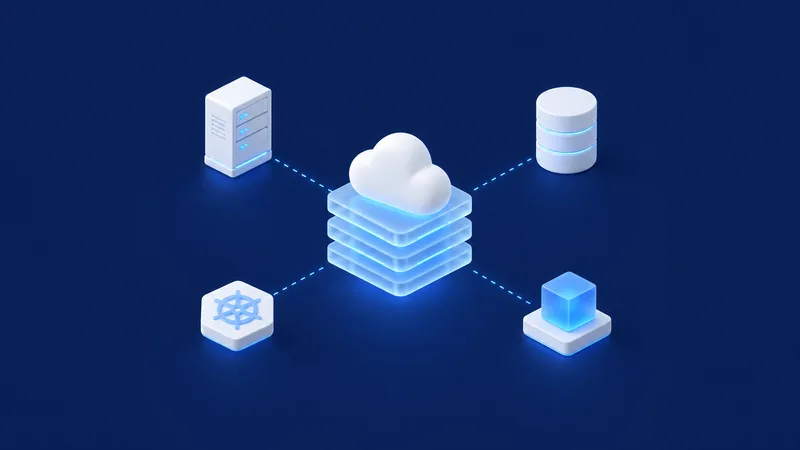
With Oasis CoreOne consistent experience

  • One catalogue across every platformA single place to discover and order services
  • Governed self-service workflowsFrom request to running service
  • Capacity and quotas visible per estate and zoneConsistent visibility and control
  • A new platform joins as an adapterIntegrate without changing the experience

Keep the infrastructure.Change how it is consumed.

OutcomeInfrastructure is discovered and becomes available to Oasis Stack without changing the service model customers see.

Capability layers

Built for modern
cloud operations.

Six capability layers turn infrastructure into a scalable, governed cloud platform. Together they run one flow, from discovering what you have to metering what is used.

One platform.
End-to-end
cloud operations.

  1. 01Discover
  2. 02Pool
  3. 03Abstract
  4. 04Standardise
  5. 05Catalogue
  6. 06Govern
  7. 07Provision
  8. 08Meter
  1. Infrastructure integration

    Connect the infrastructure you already operate.

    • Virtualisation
    • Bare-metal
    • Storage
    • Networks
    • Kubernetes

    OutcomeInfrastructure is discovered and becomes available to Oasis Stack without changing the service model.

  2. Resource abstraction

    Turn infrastructure-specific resources into standard cloud resources.

    • Compute pools
    • Storage pools
    • Resource classes
    • Availability zones

    OutcomeDifferent technologies are consumed through one consistent cloud model.

  3. Service catalogue

    Convert capacity into products people can order.

    • Sizes and classes
    • Pricing
    • Service levels
    • Availability rules

    OutcomeInfrastructure becomes commercially consumable.

  4. Estates and units

    Control who consumes infrastructure, and how much.

    • Organisation
    • Estate
    • Unit
    • Resources
    • Quotas
    • Access policies

    OutcomeShared infrastructure is safely consumed across customers and teams.

  5. Automated provisioning

    Move from infrastructure tickets to governed workflows.

    • Order
    • Validate
    • Policy check
    • Provision
    • Configure
    • Monitor

    OutcomeRepeatable service delivery with less manual work.

  6. Metering and lifecycle

    Operations continue after provisioning.

    • Provision
    • Monitor
    • Meter
    • Scale
    • Protect
    • Modify
    • Retire

    OutcomeOperators see who consumes what, where it runs and how it is used.

From discovery to value.A complete set of capabilities for scalable, governed cloud operations.
Explore the capabilities

Start with what you have

Infrastructure choice should not dictate the cloud experience.

An operator can begin with a single virtualisation platform and add more over time. The infrastructure underneath evolves, but the catalogue, the estates and units, and the service experience stay the same.

  • VMware vSphere
  • Apache CloudStack
  • OpenStack
  • Kubernetes
  • Ceph
  • Bare metal
  • GPU
View supported technologies
OutcomeChange the infrastructure without redesigning the cloud.
The same customer experience.
VMware CloudStack OpenStack Bare metal

One experience
across every platform.

Expand at your pace

Today
VMwareCloud FoundationCustomer environments
Live
Tomorrow
VMwareCloudStackBare metalKubernetesCloud Foundation
Ready

+Add another platform

Change the infrastructure without redesigning the cloud.

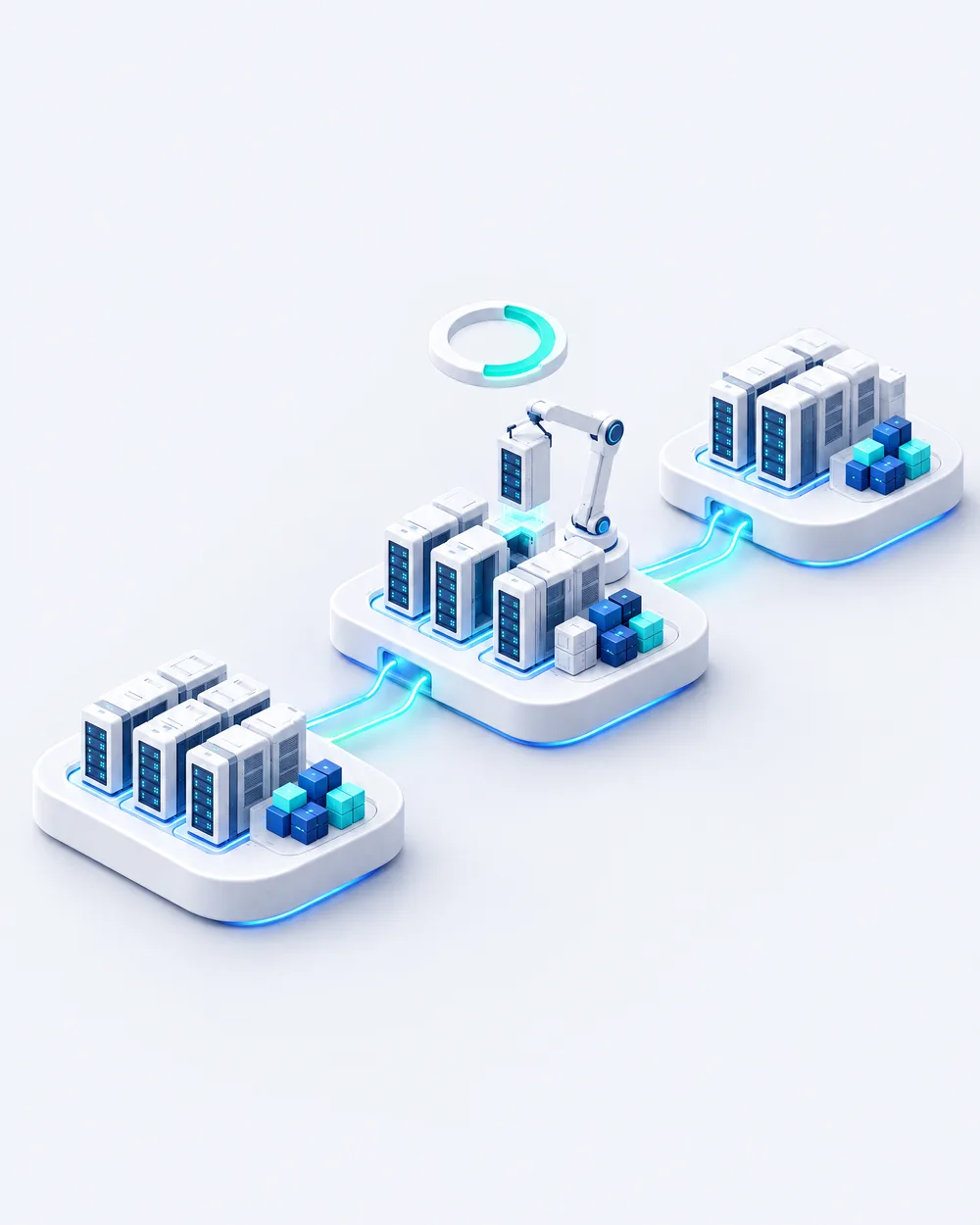
Three availability zones on separate plinths, linked by light, with a capacity ring above the middle zone
Region AAZ-1 · compute, storage, networkAZ-2 · compute, storage, networkRegion BAZ-1 · compute, storage, network

Regions and zones

Turn locations into cloud regions.

Organise infrastructure the way customers consume cloud: regions and availability zones, each carrying its own service availability, policies, catalogues and entitlements.

  • RegionsGroup locations into regions customers can choose.
  • Availability zonesKeep workloads apart with placement rules across zones.
  • ResidencyKeep services and data inside the boundary a programme requires.
  • Regional services
  • Multi-zone services
  • Sovereign services
  • Federated services

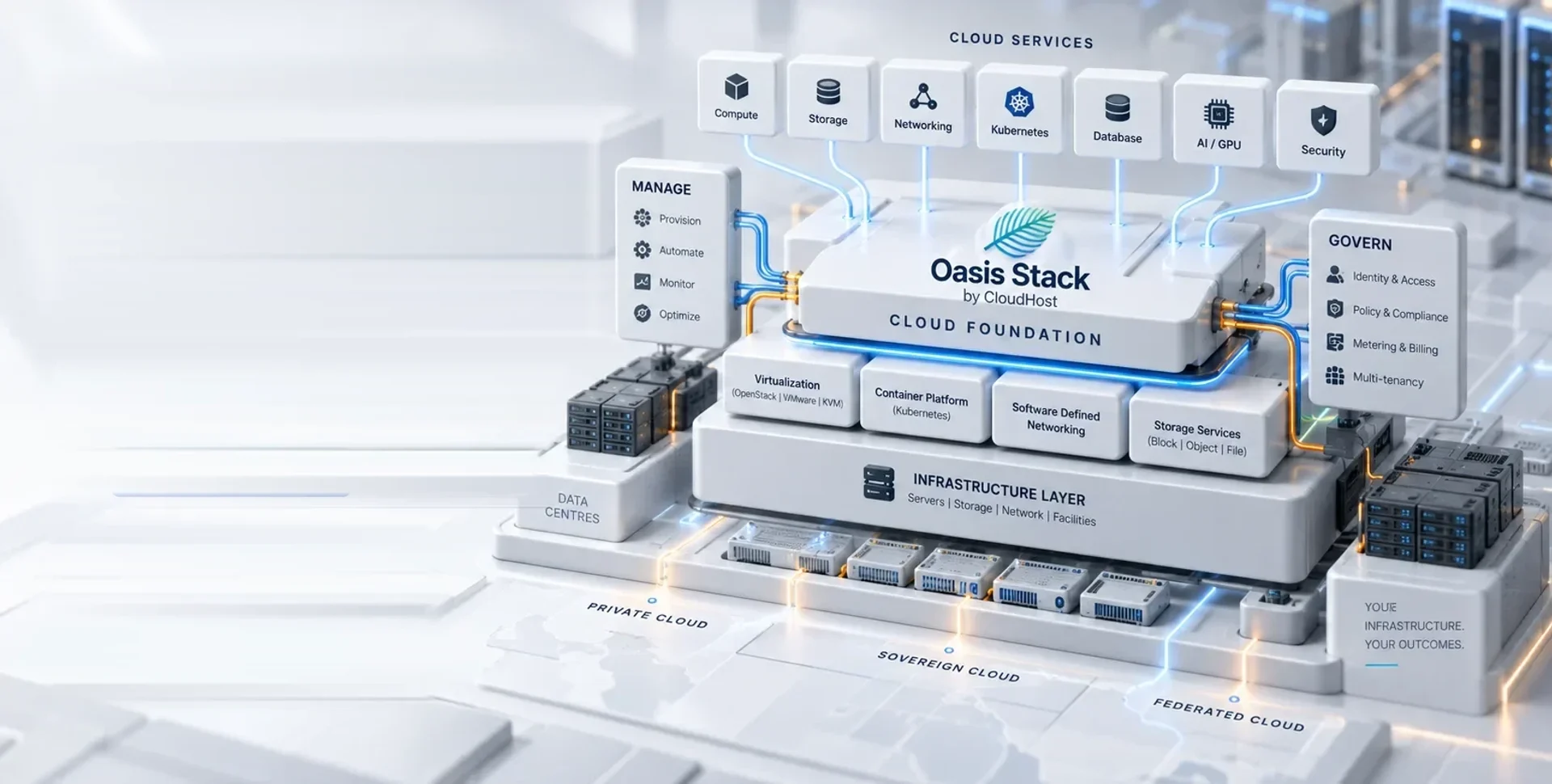
The core cloud services

Six services.
Everything a cloud needs to sell.

The traditional cloud, done properly: each service is self-service for the customer, operated by you, and sits on infrastructure you control.

A complete cloud,
built for real operations.

  1. Compute

    Virtual machines and bare metal, sized, imaged and scaled on demand.

    • Virtual machines from a catalogue of sizes and images
    • Bare-metal servers for workloads that need the whole box
    • Auto-scaling groups, snapshots and live migration
    Explore compute
  2. Storage

    Block, object and file storage, tiered by performance and priced by use.

    • Block volumes for virtual machines and databases
    • Object storage with buckets
    • File shares, tiers, snapshots and replication
    Explore storage
  3. Network

    Private networks that customers define themselves, on your fabric.

    • Private networks, subnets and routing
    • Load balancers, firewalls, public IPs, DNS and CDN
    • Site-to-site VPN and dedicated connectivity
    Explore network
  4. Kubernetes

    Managed clusters, ready for the platforms and applications built on them.

    • Clusters and node pools provisioned from the catalogue
    • Upgrades and scaling, operated by you
    • Ingress, storage classes and networking wired in
    Explore Kubernetes
  5. Database as a Service

    Managed databases with the operations included, metered like every other service.

    • PostgreSQL, MySQL, MariaDB, MongoDB and Microsoft SQL Server
    • Managed, with the operations included
    • Metered like every other service
    Explore databases
  6. Backup and disaster recovery

    Protection for every service above, ordered from the same catalogue.

    • Recovery designed per workload, across sites
    • Including a public cloud, through the Acronis Cloud and Commvault integrations, available today
    • Ordered and metered like every other service
    Business continuity
Built on your infrastructure.The same six services run across every platform, through a consistent catalogue and operating model.
See how it works

Every cloud model

One foundation.
Every cloud model.

Cloud Foundation underpins each Oasis Stack offering, on the same platform. Choose the model that fits your business, now or in the future.
Sovereign Enterprise Federated Edge
  1. Oasis Federated Cloud

    Package infrastructure into services you sell under your brand, and offer selected services through the federation.

    Federated Cloud
  2. Oasis Sovereign Cloud

    Controlled infrastructure inside a jurisdiction: a shared national cloud, a private government cloud, or fully air-gapped with no federation.

    Sovereign Cloud
  3. Oasis Enterprise Cloud

    Standardise internal infrastructure and give business and application teams self-service, on-premises or colocated.

    Enterprise Cloud
  4. Oasis Edge Cloud

    A mini deployment with only the modules a use case needs, at remote sites, for recovery or for a budget rollout.

    Edge Cloud
GPU Running GPU and accelerated infrastructure as governed services? Infrastructure for AI Same platform. More possibilities.

Operators and customers

Designed for operators. Simple for customers.

The operator controls the infrastructure; the customer consumes the service, without the complexity underneath.

For the operatorControl the infrastructure.
  • Capacity and quotas: used, committed and available, per estate and per zone
  • Policies and placement: where and how services may run
  • Catalogue: which infrastructure becomes which service, at which size and price
  • Maintenance windows, host evacuation and rolling upgrades, planned around customer workloads
  • Health, performance and availability measured the way the contract defines them
How Amin helps operate it

Capacity viewPer estate and zone

UsedConsumed today
CommittedPromised to orders
AvailableStill orderable
Per zoneBefore it becomes a problem
For the customerConsume the service.

Choose a service, a size and a region, configure it and deploy it.

  1. Service
  2. Size
  3. Region
  4. Configure
  5. Deploy

Catalogue sizesExample

  • ComputeGeneral compute4 vCPU · 16 GB RAM · standard storage
  • MemoryMemory optimised8 vCPU · 64 GB RAM · premium storage
  • GPUGPU computeGPU · CPU · RAM · accelerated storage

Sizes, prices and service levels are set by the operator in the catalogue.

See it running

The services, as your customers see them.

The customer portal with the six services in the catalogue, and a virtual machine, a cluster and a database being ordered and provisioned.

Connected across Oasis Stack

The foundation the other modules stand on.

Every service here is ordered from Core's catalogue, provisioned by its workflows, billed by its commercial engine and bound to its tenancy. The AI, governance, transformation and marketplace modules build on the same foundation.

Build. Run. Accelerate. Control. Cloud Foundation is where you run.
Explore the platform

Adopting this module

What adopting Cloud Foundation involves.

Each of these is agreed with you before deployment, and the walkthrough we show uses your selected services and integrations.

Talk to us
  1. Supported infrastructureConfirm the virtualisation, storage, network and Kubernetes platforms in scope, and the adapter each one connects through.
  2. Service behaviourAgree the service classes, sizes, regions and zones the catalogue publishes, and the quotas and policies that apply to them.
  3. Delivery and supportDefine who operates the platform, the maintenance windows, and the service levels customers are offered.

In productionThese are the services YallaCloud customers order in production, on infrastructure CloudHost operates.

Read the case study