Oasis Sovereign Cloud · For governments and regulated sectors

Your Cloud.
Your Jurisdiction.

A secure, compliant and independent cloud for governments and regulated organisations. Built to keep your data, operations and control within your borders, without cutting you off from the wider ecosystem.
Talk to us How sovereignty is layered
Data residencyLocal operationsGoverned identityControlled interoperability
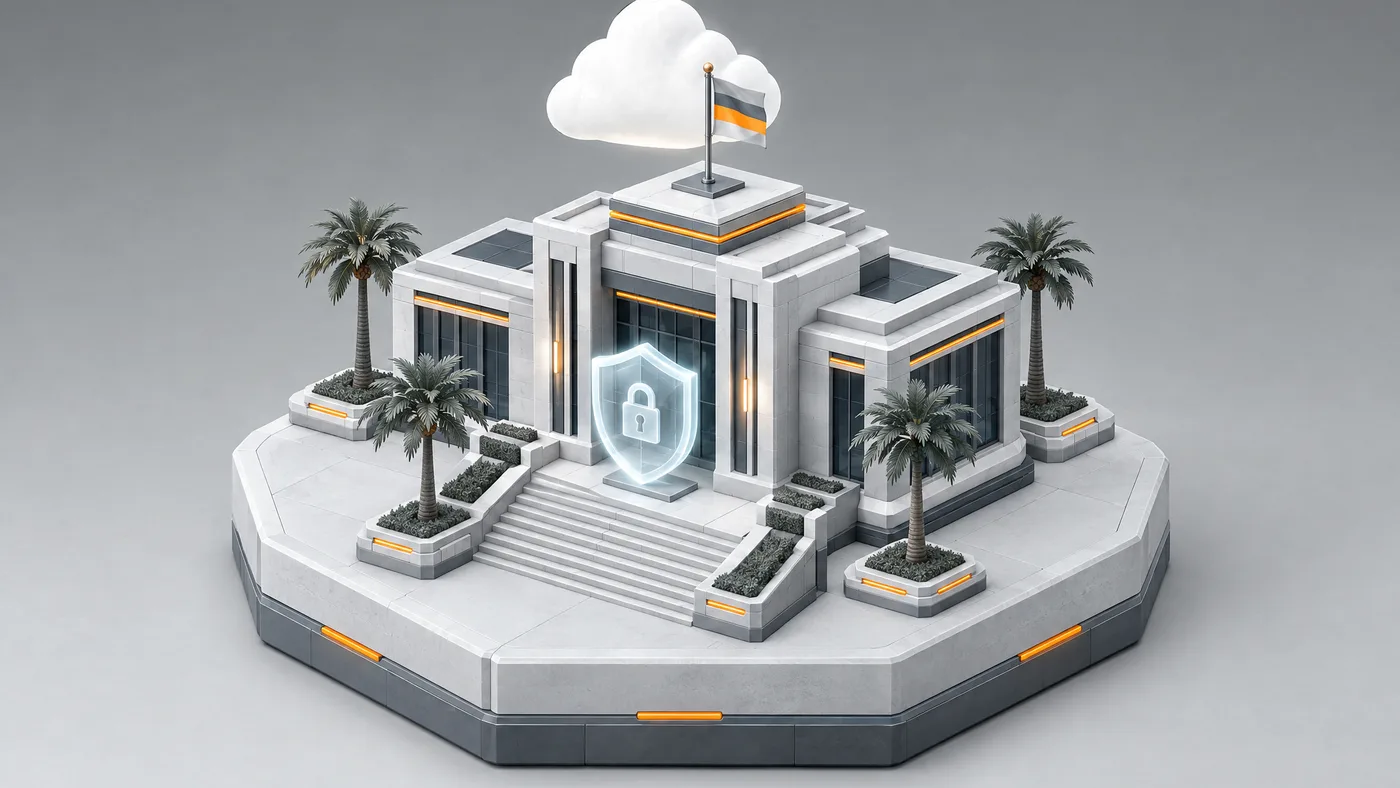
A civic building with a glass shield at its entrance and a flag above, rendered as a white isometric diorama
Sovereignty beyond residency
Seven layers, not one. Where data sits is the first question, not the only one.
Compliance by design
Policy enforced in the platform, with the evidence a regulator asks for.
Operated locally
Run by your own teams or by the Oasis Stack team under a support contract, in your jurisdiction and under your law.
Connected, not isolated
Join the federation by agreement, when you choose; an air-gapped deployment stays disconnected. Customer data never moves automatically.
The question

How do you keep sovereignty without becoming an island?

Most sovereign programmes stop at data residency, then discover that identity, operations and the technology roadmap still sit somewhere else. Oasis Sovereign Cloud treats sovereignty as a set of decisions you make layer by layer.

Why now

The fastest growth is in this region.

Governments remain the main buyers of sovereign cloud, followed by regulated industries and critical infrastructure.

$80 billionWorldwide sovereign-cloud IaaS spending forecast for 2026, up 35.6% on 2025.
89%Forecast 2026 growth in the Middle East and Africa, the fastest of any region.

Source: Gartner, “Gartner Says Worldwide Sovereign Cloud IaaS Spending Will Total $80 Billion in 2026”, press release, 9 February 2026. Read the release

Seven layers of sovereignty

Decide each layer, deliberately.

Each layer can be held locally, shared under agreement, or delegated. The platform makes the choice explicit and enforces it, rather than leaving it to a contract clause.

The sovereignty model
  1. 01
    Data
    Where data is stored, processed and backed up, and who may ever read it.
  2. 02
    Infrastructure
    The racks, the site and the hardware the cloud runs on, inside your borders.
  3. 03
    Operations
    Who runs the platform day to day, under whose employment and whose law.
  4. 04
    Identity
    Whose directory issues credentials, and where authentication decisions are made.
  5. 05
    Security
    Key custody, encryption, monitoring and incident response, held locally.
  6. 06
    Governance
    The policies enforced across every service, and the evidence they produce.
  7. 07
    Technology
    The right to run, inspect and continue the platform without a foreign dependency.
What you get

A cloud that answers to you.

The same platform that runs commercial clouds, deployed under your jurisdiction and your operating rules.

Data residency and local control
Storage, processing and backup stay in the location you nominate. Movement between zones is a policy decision, not a default.
Built for regulatory compliance
Controls mapped to NCA ECC and PDPL, and structured for GCC-ready programmes, with evidence generated by the platform.
Dedicated infrastructure
Your own region, single-tenant or air-gapped, on hardware and sites you approve.
Governed identity and access
Your directory, your policies, your audit trail — enforced on every service, not bolted on per application.
Operated by regional teams
Run and supported by people in your jurisdiction, with Amin watching health, capacity and compliance underneath.
Controlled interoperability
Publish and consume services with other Oasis clouds by agreement. Customers and data stay home.
Deployment models

Three ways to draw the boundary.

The boundary is a design decision; the platform, the catalogue and the governance model stay the same across all of them. Where each part runs

Shared national cloud
Hosted for many government bodies and departments, each an isolated tenant with its own keys and identity.
Private government cloud
A cloud for one government body, with no shared control plane.
Air-gapped
Fully local, for isolated government bodies and classified environments, as a separate deployment of its own: no federation and no connection to the admin centre. Installed and upgraded on site by the Oasis Stack team, with licences, updates and patches carried in on USB or as encrypted files.
Shared national cloud

One national cloud. Every public tenant, isolated.

Ministries, cities, hospitals, banks, universities and state-owned enterprises run side by side on one substrate, each separated cryptographically.

MinistriesCitiesHealthFinanceEducationState-owned enterprises
Cryptographic tenancy
Each tenant’s keys are held in an HSM it controls.
Identity separation
A tenant-scoped identity provider, and no shared administration.
Audit transparency
Per-tenant logs, open to the tenant and the operator together.
Independent exit
Each tenant can leave on its own terms.
What delivers it

The modules behind a sovereign cloud.

A sovereign cloud is not a separate product. It is the platform, deployed inside your boundary.

01
Oasis Core
The administration module: tenancy, experience, commercial and operations, plus the federation link you control.
Every lifecycle process as a governed workflow
One tenancy model across departments and agencies
Federation participation by explicit agreement
02
Governance, Security & Compliance
Identity, policy, compliance and audit applied across every layer of the estate, on top of the controls in Oasis Core. What each one provides
Policy enforced across all services
Continuous compliance evidence
Audit trails for regulators
03
Cloud Foundation
Compute, storage, network, Kubernetes and databases, delivered as services on infrastructure you own.
Runs on your hardware and sites
Same services in every zone
No dependency on a foreign control plane
Why not the alternatives

Sovereignty is not a region label.

A local region on a foreign platform answers one layer of the question. The other six stay abroad.

Elsewhere
A hyperscaler region in-country
Data may sit locally, but identity, operations, roadmap and the right to continue remain with the provider.
Elsewhere
A virtualisation estate
You control the infrastructure, but there is no catalogue, no governed self-service and no evidence the regulator will accept.
Only with Oasis Stack
A sovereign cloud you operate
All seven layers decided by you, delivered by a platform that enforces them and produces its own compliance evidence.
How to start

From mandate to a running cloud.

No trial tier. A sovereign programme starts with the boundary and the regulation, then the build.

1
Assess
Your mandate, your regulations and the estate you already run, mapped against the seven layers.
2
Design
The boundary, the deployment model and the governance policies, agreed before anything is built.
3
Build
The platform stood up inside your boundary, on your infrastructure, with your identity.
4
Operate
Run by regional teams with Amin alongside, producing compliance evidence continuously.
For your role

The question a sovereign programme is actually asked.

Not by the technology team — by the people who have to defend the decision.

Government
How do we keep digital sovereignty without becoming an isolated technology island?
Sovereign control of data, operations, identity and technology, combined with governed interoperability: you publish and consume services with other Oasis clouds by explicit agreement, and customer data never moves automatically.
What it gives youSovereignty across seven layers, without isolation.
Brief · 2 pages · sent by email
The Oasis Sovereign Cloud brief

The seven layers, the three deployment models and the controls you can prove — for your programme board.

Get the brief
Your data. Your operations. Your jurisdiction.

Start with the boundary.

A conversation about your mandate, your regulations and the sovereignty layers you need to hold.

Talk to us Explore the platform